How to Care for and Maintain Your Jewelry Collection
A curated jewelry collection represents both monetary investment and personal sentiment. Whether your jewelry box contains family heirlooms, fine gemstones, precious metals, or modern fashion pieces, proper care ensures that these items retain their brilliant luster and structural integrity over time. Daily wear, environmental factors, household chemicals, and improper storage can dull surfaces, weaken prongs, and cause irreversible damage.
Maintaining your collection requires a proactive approach. By understanding the distinct needs of various metals and gemstones, establishing safe cleaning routines, and storing your pieces correctly, you can preserve their beauty and pass them down through generations.
Daily Habits for Jewelry Protection
Preventative care is the single most effective way to keep your jewelry looking pristine. Adopting a few simple daily habits eliminates the primary causes of wear and tear before damage occurs.
The Last On, First Off Rule
Make it a strict rule to put your jewelry on as the final step of your morning routine and take it off as the first step of your evening unwinding. Cosmetics, perfumes, hairsprays, body lotions, and sunscreens contain chemical compounds that leave a dulling film on metal surfaces and can etch delicate gemstones like pearls or opals.
-
Apply Beauty Products First: Allow all lotions, perfumes, and hair products to dry completely on your skin before putting on necklaces, rings, or earrings.
-
Remove Before Household Chores: Never wear jewelry while cleaning house, washing dishes, or doing yard work. Harsh cleaners, bleach, and abrasive scrubbing pads can discolor metals and chip stones.
-
Remove Before Physical Activity: Sweating introduces salt and acidity that accelerates metal tarnish. Additionally, weightlifting or playing sports risks snagging chains or bending ring bands under pressure.
-
Avoid Water Environments: Remove all jewelry before swimming in chlorinated pools, relaxing in hot tubs, or swimming in the ocean. Chlorine attacks metal alloys like gold and silver, causing microscopic stress cracks, while saltwater can corrode surfaces.
Tailored Cleaning Methods for Different Materials
Not all jewelry can be cleaned using the same method. Using an aggressive cleaner on a fragile organic gemstone can cause permanent damage, while gentle methods may fail to remove buildup from durable stones.
Fine Metals: Gold, Platinum, and Silver
Precious metals require regular cleaning to remove oils and atmospheric tarnish.
-
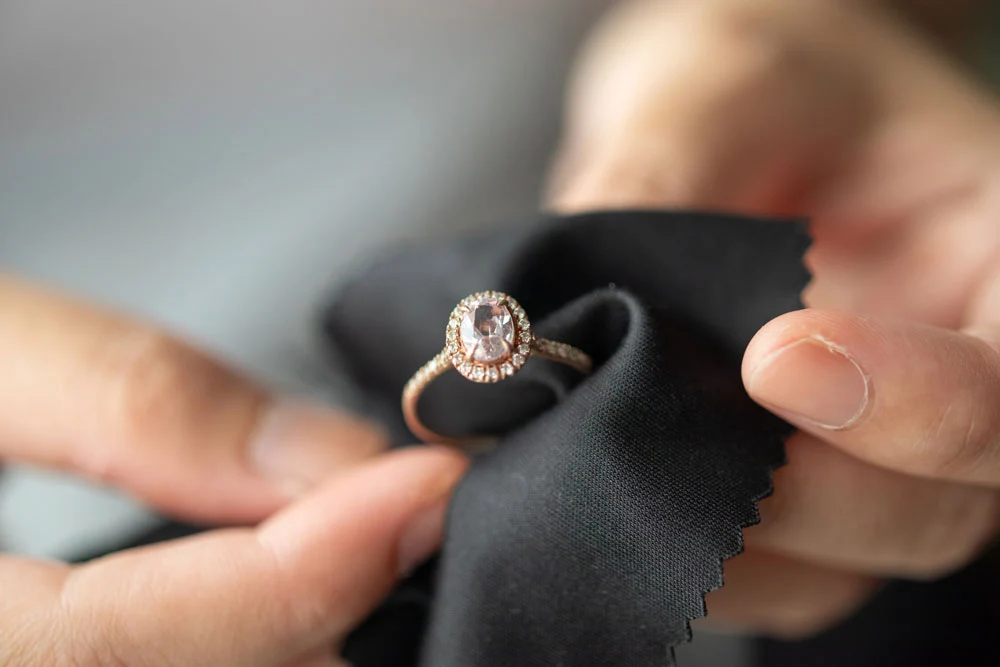
Gold and Platinum: Clean these metals using a gentle solution of warm water and a few drops of mild dish soap. Soak the pieces for ten minutes, gently brush around settings using a soft-bristled baby toothbrush, rinse thoroughly under lukewarm running water, and dry with a soft lint-free microfiber cloth.
-
Sterling Silver: Silver reacts naturally with sulfur and oxygen in the air, creating a dark tarnish layer. Use a specialized silver polishing cloth treated with tarnish inhibitors. For heavier tarnish, apply a gentle, non-abrasive silver cream paste rather than harsh liquid dips, which can strip protective finishes.
Hard Gemstones: Diamonds, Sapphires, and Rubies
Diamonds, sapphires, and rubies are exceptionally hard and durable, making them resistant to surface scratches. However, grease and skin oils readily adhere to their surfaces, cutting off light entry and dimming their sparkle.
-
Soaking these stones in warm water mixed with mild grease-cutting dish soap restores their brilliance.
-
Use a soft toothbrush to clean behind the stone where dust and lotion collect.
-
Ammonia-based glass cleaners can be used sparingly on diamonds to remove stubborn oil films, provided the metal setting is solid platinum or gold.
Organic and Porous Gemstones: Pearls, Opals, and Turquoise
Porous and organic materials require extra care because they absorb liquids and are susceptible to thermal shock and chemical damage.
-
Pearls: Never submerge pearl strands in water, as this weakens the silk thread on which they are strung. Wipe pearls gently with a damp soft cloth after every wear. Store them in a breathable pouch rather than airtight plastic, which can dry out the pearls and cause cracking.
-
Opals and Turquoise: Clean these stones using only a soft cloth slightly dampened with plain water. Never use ultrasonic cleaners, steam, or soaps, as these gemstones absorb liquids readily, leading to discoloration or cracking.
Understanding Professional Maintenance and Inspection
While home cleaning maintains surface shine, professional jeweller inspections safeguard the structural security of your valuable items.
Schedule Annual Professional Checks
Bring heavily worn items, such as engagement rings or daily bracelets, to a professional jeweler at least once a year. Jewelers utilize specialized magnification equipment to check critical structural components.
-
Prong Inspection: Jewelers check if the metal prongs securing your gemstones have worn thin, lifted, or shifted, which could lead to a lost stone.
-
Restringing Silk Strands: Fine pearl and bead necklaces strung on silk thread stretch over time. Jewelers recommend restringing them every one to two years, placing knots between each bead to prevent them from rubbing against one another or scattering if the strand breaks.
-
Professional Ultrasonic and Steam Cleaning: Jewelers utilize industrial steam units and ultrasonic baths that vibrate microscopic bubbles into tiny crevices, removing deeply embedded grime that home methods cannot reach.
Proper Storage Solutions to Prevent Damage
How you store your jewelry when it is not being worn directly impacts its lifespan. Careless storage leads to scratched surfaces, tangled chains, and accelerated oxidation.
Individual Separation is Key
Gemstones possess varying degrees of hardness. A loose diamond inside a jewelry box will easily scratch metal bands, pearls, sapphires, and other diamonds if left unsecured.
-
Use Soft Compartments: Store each piece of jewelry in individual fabric pouches, soft velvet slots, or separate compartments within a lined jewelry chest.
-
Hang Chains Vertically: To prevent knots and tangles in thin chains, hang them from vertical hooks or thread them through reusable silicone straws before closing the clasp.
-
Control Humidity: Store sterling silver in anti-tarnish fabric bags or place silica gel packets inside your jewelry box to absorb excess ambient moisture.
-
Avoid Direct Sunlight and Heat: Keep your jewelry storage away from direct sunlight, radiators, and heating vents. Constant exposure to light and heat can bleach certain colored gemstones, such as amethyst and topaz, while drying out opals.
Frequently Asked Questions
Are home ultrasonic cleaner devices safe for all jewelry?
No. While home ultrasonic machines work well for plain gold, platinum, diamonds, sapphires, and rubies, the intense sound waves can shatter fractured gemstones, loosen pavé settings, and destroy porous or organic gems like emeralds, pearls, opals, and turquoise.
Why does sterling silver tarnish even when it is stored inside a box?
Sterling silver contains copper, which reacts naturally with sulfur compounds present in the surrounding air to form silver sulfide, known as tarnish. Storing silver in non-airtight containers or near rubber bands and cardboard boxes accelerates this chemical process.
Is toothpaste a safe household cleaner for fine jewelry?
No. Toothpaste contains abrasive particles designed to scrub dental enamel. When applied to metals like gold, silver, or platinum, these abrasives create permanent micro-scratches that dull the polished finish.
How do I remove a severe knot from a fine gold chain?
Lay the chain flat on a hard, well-lit surface. Apply a drop of mineral oil or baby oil directly to the knot, then use two wooden toothpicks or fine sewing needles to gently wiggle and pull the loops apart without pulling forcibly on the chain itself.
Can I wear my fine jewelry while taking a shower or bath?
It is not recommended. Soap scum, shampoos, and conditioners leave a cloudy film over gemstones and metal mountings. Additionally, slippery soap reduces skin friction, increasing the risk of rings sliding off down the drain.
What should I do if a gemstone becomes loose in its prong setting?
Stop wearing the piece immediately to prevent the stone from falling out. Place the item in a sealed zip-top bag and take it to a professional jeweler for prong tightening before wearing it again.
How does chlorine damage gold jewelry?
Chlorine acts as an oxidizing agent that attacks the alloy metals, such as copper and silver, mixed into carat gold. Over time, exposure to chlorine causes stress corrosion cracking, making settings brittle and prone to snapping.


Related Posts

Your Wedding Style with Traditional Ear Chain and Bridal Jewellery Set