How Accessories Influence First Impressions and Personal Branding
First impressions take mere seconds to form. Long before you open your mouth to introduce yourself in a boardroom, at a networking event, or on a casual date, your overall appearance communicates a narrative. While foundational garments like suits, dresses, and trousers establish the backdrop of your outfit, accessories serve as the defining details. A subtle timepiece, a bold pair of glasses, or an heirloom ring can transform a generic look into a memorable personal brand statement. Accessories act as non-verbal signals, conveying confidence, attention to detail, status, and personality without uttering a single word.
Understanding the psychological mechanisms behind non-verbal communication allows individuals to strategically curate their wardrobe choices. Personal branding is no longer reserved for corporations or high-profile public figures; it is a vital tool for career advancement, networking, and self-expression. By mastering the intentional use of accessories, you control the story your visual presence tells.
The Psychology of First Impressions
Human beings are wired to make rapid visual judgments. Evolutionary psychology suggests that rapid visual assessment was once a survival mechanism, helping humans determine whether a stranger posed a threat. In modern society, this mental shortcut, known as thin-slicing, relies on visual cues to evaluate trustworthiness, competence, social status, and approachability within milliseconds.
Visual details play a disproportionate role in these initial evaluations. While a well-tailored suit signals general professionalism, the accessories attached to that suit signal individuality. Psychological studies on enclothed cognition reveal that the clothes and items we wear do not just alter how others perceive us; they also directly impact our internal mindset and behavior. Wearing a meaningful accessory, such as a sharp leather watch or a structured leather briefcase, can boost physical posture, cognitive performance, and perceived authority.
Defining Personal Branding Through Visual Anchors
Personal branding is the deliberate practice of managing and shaping how you are perceived by others. It is the alignment of your internal values, professional competence, and external presentation. Accessories function as visual anchors in personal branding—consistent visual elements that make you immediately recognizable and memorable.
Consider famous figures throughout history: Steve Jobs was known for his minimal round glasses, Iris Apfel for her oversized colorful bangles, and Winston Churchill for his pocket watch and bow tie. These items were not chosen at random; they became synonymous with their identities. Visual anchors create consistency, and visual consistency builds trust over time.
The Spectrum of Accessories and Their Signals
Different accessories communicate distinct messages. Categorizing accessories helps clarify how specific choices influence perception in professional and social environments.
Watches and Timepieces
The wristwatch remains one of the most powerful functional accessories in personal branding. Despite the ubiquity of smartphones, wearing a traditional timepiece signals respect for time, punctuation, and tradition.
-
Classic Mechanical Watches: Signal tradition, craftsmanship, attention to detail, and financial stability.
-
Minimalist Quartz Watches: Communicate modern efficiency, simplicity, and a clean aesthetic.
-
Smartwatches: Suggest tech-savviness, health consciousness, and a fast-paced lifestyle, though they can sometimes communicate distraction if notification lights flash during meetings.
Eyewear and Optical Framing
Eyewear sits directly on the face, making it one of the most prominent accessories you can wear. It frames your gaze and draws immediate focus to your eyes during conversation.
-
Thick Acetate Frames: Signal creative thinking, intellect, and artistic boldness.
-
Rimless or Metal Frames: Communicate precision, understatement, and analytical thinking.
-
Colored Frames: Suggest playfulness, confidence, and an outgoing personality.
Jewelry: Metals, Gems, and Minimalism
Jewelry choices are intimately tied to personal expression. The key to effective personal branding through jewelry is balance and intentionality.
-
Minimalist Metals: Delicate gold or silver chains, simple cufflinks, and modest rings communicate understated elegance and refinement.
-
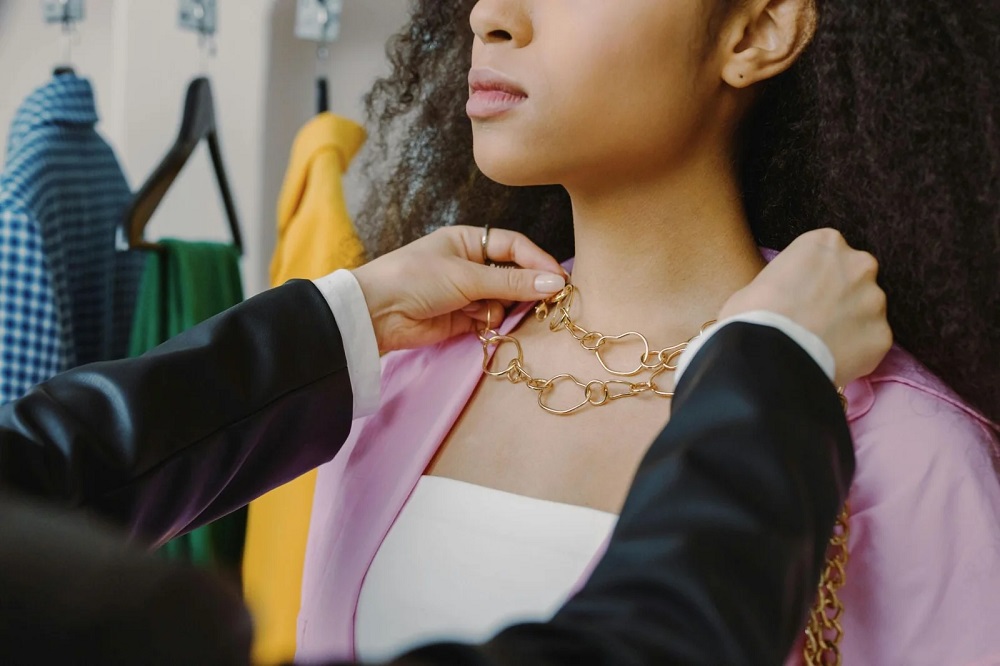
Statement Pieces: Large gemstone rings, layered necklaces, or sculpted cuffs project high confidence, authority, and creative flare.
-
Cultural and Sentiment Pieces: Items with historical or personal origins tell a story of family heritage, travel, or deep personal values, inviting meaningful conversation.
Bags, Footwear, and Leather Goods
The quality of practical items speaks volumes about an individual’s organization and standards. Leather goods act as functional extensions of your professional identity.
-
Structured Briefcases and Totes: Signal preparation, professional organization, and executive capability.
-
Canvas Backpacks: Suggest flexibility, youthfulness, and an informal work style.
-
Polished Footwear and Belts: Demonstrate an appreciation for thoroughness, as poorly maintained shoes often ruin an otherwise immaculate outfit.
Cultural Context and Situational Awareness
The impact of an accessory depends heavily on context. An accessory that conveys power in a creative agency might appear unprofessional in a conservative financial firm. Strategic personal branding requires situational awareness—adapting your choices to match the cultural expectations of your environment while preserving your core identity.
In corporate and traditional settings, minimalism is key. Accessories should complement the wearer rather than dominate the interaction. Subtle cufflinks, a classic pen, or a simple pearl or metal earring communicate professionalism without creating a distraction.
In creative, entrepreneurial, or tech sectors, unique and unconventional accessories are often praised. A bold brooch, hand-crafted leather boots, or distinct artistic jewelry can highlight originality, innovation, and courage.
The Golden Rules of Strategic Accessory Selection
To build a cohesive and authentic personal brand, apply these core principles when choosing accessories:
-
Focus on Quality Over Quantity: One well-crafted piece communicates far more prestige than multiple low-quality items.
-
Maintain Visual Harmony: Ensure metals match across items (e.g., matching a watch buckle with a belt buckle) to present a intentional and polished appearance.
-
Keep Proportion in Mind: Choose accessories that match your physical frame. Oversized items can overwhelm smaller frames, while delicate items can get lost on larger physiques.
-
Prioritize Authenticity: Never wear an item purely for status if it feels alien to your personal style. Discomfort shows quickly in body language.
-
Observe the Rule of Focus: Limit statement pieces to one per outfit. If your eyewear is bold, keep your jewelry and watch restrained to avoid visual clutter.
Frequently Asked Questions
What is the single most impactful accessory for a business professional?
A high-quality, classic wristwatch is widely considered the most effective professional accessory. It demonstrates a commitment to time management, appreciation for craftsmanship, and subtle taste without being overly flashy.
How can someone transition their personal brand from casual to executive using accessories?
Upgrading practical everyday items is the fastest route. Swap a casual backpack for a structured leather briefcase or tote, replace plastic or digital watches with a minimalist analog timepiece, and ensure all leather items like belts and shoes are clean, polished, and color-matched.
Do smartwatches negatively affect professional first impressions?
Smartwatches do not inherently harm first impressions, but their functionality can. Frequent screen illuminations, buzzing notifications, or looking at your wrist during conversation can convey impatience or disrespect. Turning on do-not-disturb modes during key interactions prevents these negative perceptions.
Can wearing too many accessories damage a personal brand?
Yes. Over-accessorizing creates visual clutter and distracts from the wearer’s face and message. It can give the impression of insecurity, lack of focus, or desperation for attention. Restraint and balance are central to sophisticated personal branding.
How do I choose between silver, gold, and alternative metals for my personal style?
Selection should depend on your skin tone undertones and dominant wardrobe colors. Cool undertones generally pair best with silver, platinum, and white gold, while warm undertones complement yellow gold and rose gold. Darker metals like matte black or titanium offer a modern, industrial aesthetic that fits technical or modern wardrobes.
Is it necessary to wear expensive designer accessories to build a strong personal brand?
No. Personal branding relies on fit, alignment, cleanliness, and intentionality rather than price tags. A clean, unbranded vintage leather bag or a simple, well-maintained vintage watch often makes a more sophisticated impression than items covered in loud designer logos.
How do accessories influence internal confidence?
Through the principle of enclothed cognition, physical items carry psychological meaning. Wearing items associated with success, competence, or personal history subconsciously alters your posture, speech delivery, and comfort level, which directly enhances the confidence you project to others.


Related Posts


Products for ladies at Wholesale Rates